Buenos Aires Museums isn't just about art or national history. There's room for everything. From the most emblematic and renowned museums to those unique places that feel like a true discovery. I know that hearing the name "Museum of Water" sounds a bit strange, but I guarantee that the history of this museum—and especially that of its building—is interesting enough to make you want to go and see this majestic work of architecture.
Museos de Buenos Aires no se trata solamente de arte o de la historia patria. Hay espacio para todo. Desde los museos más emblemáticos y reconocidos hasta esos lugares únicos que se sienten como un verdadero descubrimiento. Sé que escuchar el nombre de "Museo del Agua" suena un tanto extraño, pero les garantizo que la historia de este museo - y sobre todo la de su edificio - son lo suficientemente interesantes como para que quieran ir a conocer esta majestuosa obra de la arquitectura.

About three blocks from the iconic Ateneo Splendid Bookstore and a fifteen-minute walk from the historic Teatro Colón, one encounters a dreamlike facade. More than 300,000 brightly colored English tiles adorn the structure of a building that occupies an entire city block, bordered by Ayacucho, Viamonte, Riobamba, and Córdoba streets. Walking around to admire the structure from all angles is a spectacle. For some visitors, the building gives the impression of being a giant model or an enormous cake due to its colors, the level of detail, and how beautiful it looks from the outside. This is the Waterworks Palace, officially named the Great Engineer Guillermo Villanueva Reservoir. Built in 1894 as a government response to the need for improvements in public hygiene due to the city's and population's growth during the second half of the 19th century, this enormous structure is not only beautiful on the outside, with its terracotta facade, but also incredible on the inside, with an iron structure manufactured in Belgium that houses water tanks on three levels, supported by 180 columns, for a total capacity of 72 million liters of potable water. I can only imagine how much this project must have meant from its inauguration for a city that had lost some two hundred thousand people in just a few decades due to cholera, typhoid, and yellow fever epidemics. At that time, having access to clean drinking water meant health and could be the difference between life and death.


A unas tres cuadras de la icónica libería Ateneo Splendid y unos quince minutos caminando desde el histórico Teatro Colón uno se encuentra con una fachada de ensueño. Más de 300 mil mayólicas inglesas en colores llamativos revisten la estructura de un edificio que abarca toda una manzana, cercada por las calles Ayacucho, Viamonte, Riobamba y la Avenida Córdoba. Dar la vuelta para observar la estructura desde todos sus ángulos es un espectáculo. Para algunos visitantes, el edificio da la impresión de ser una maqueta gigante o un enorme pastel debido a sus colores, el nivel de detalle y lo hermoso que se ve desde fuera. Se trata del Palacio de Aguas Corrientes, cuyo nombre oficial el Gran Depósito Ingeniero Guillermo Villanueva. Construido en 1894 como respuesta del gobierno a la necesidad de hacer avances en la higiene pública debido al crecimiento de la ciudad y de su población durante la segunda mitad del siglo XIX, esta enorme construcción no sólo es hermosa por fuera, con esa fachada de terracota, sino increíble por dentro, con una estructura de hierro fabricada en Bélgica que en sus tres niveles alberga tanques de agua sostenidos por 180 columnas para una capacidad total de 72 millones de litros de agua potable. Sólo puedo imaginar lo mucho que debió significar esta obra desde su inauguración para una ciudad que había perdido unas doscientas mil personas en pocas décadas debido a las epidemias de cólera, tifoidea y fiebre amarilla. En esa época contar con agua potable significaba salud y podía ser la diferencia entre la vida y la muerte.
 |  |  |
|---|---|---|
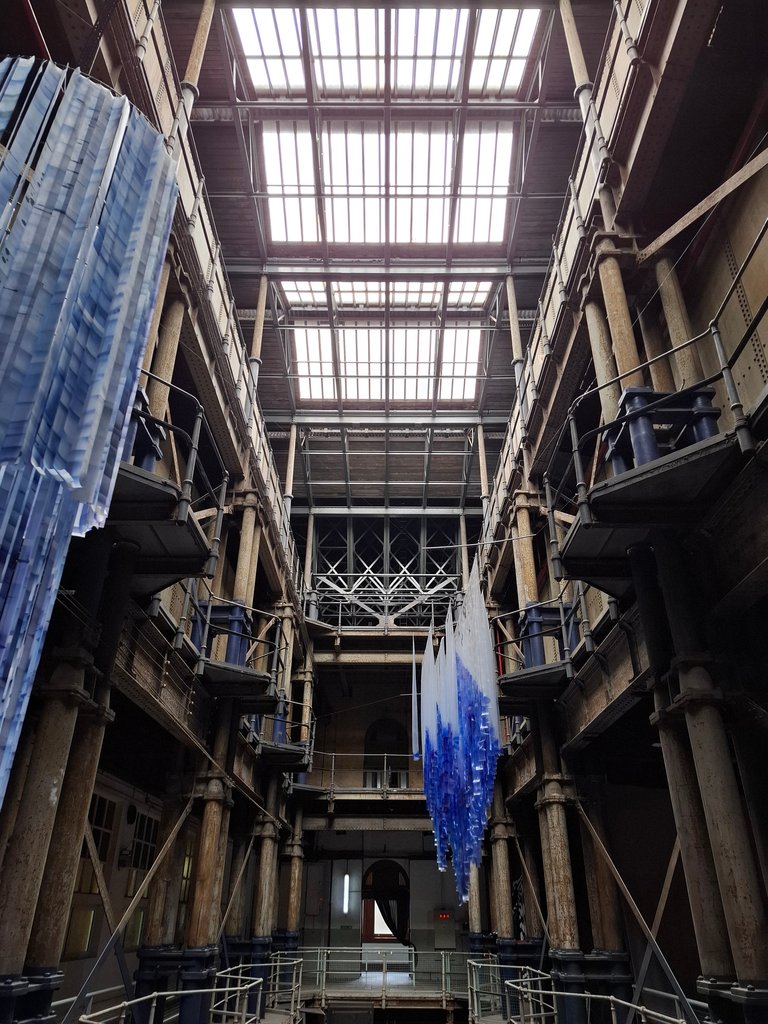 |  |  |

The building currently houses the offices of AySA (Agua y Saneamientos Argentinos S.A.), a public company providing drinking water and wastewater services; and also the Water and Sanitary History Museum, with free admission on Wednesdays, where in addition to the permanent exhibits consisting of water pumps, period furniture, signs, valves and other elements associated with the history and original operation of the building, temporary art exhibitions are also displayed, usually related to water and the environment. So you can also appreciate some art inside this architectural gem, which, at the end of the 19th century, was the most important water reservoir on the continent and was declared a National Historic Monument in 1989. One of the things I liked most about this building, besides the fact that it wasn't on my initial list of places to visit, is the way beauty and functionality come together. It's not just a beautiful building constructed for aesthetic purposes or an empty facade; it's also a true work of engineering and public health that contributed to improving hygiene and the lives of Argentinians. It's impossible to walk through the streets of Buenos Aires and not notice it, and even harder not to stop and admire its facade, its colors, and how imposing it is. I had never heard of a Water Museum before, and until now I haven't visited another one, but it's definitely a place I recommend to everyone visiting Buenos Aires. Had you heard of this place? Would you visit it? Let me know in the comments.


Dentro de las instalaciones del edificio actualmente funcionan las oficinas de la AySA (Agua y Saneamientos Argentinos S.A.), empresa pública del servicio de agua potable y de aguas servidas; y también funciona el Museo del Agua y de la Historia Sanitaria, con entrada gratuita los días miércoles, en donde además de las muestras permanentes conformadas por bombas de agua, mobiliario de la época, carteles, llaves de paso y demás elementos asociados a la historia y al funcionamiento original del edificio, también se exhiben muestras artísticas temporales, normalmente relacionadas con el agua y el medio ambiente. Así que también pueden apreciar algo de arte en el interior de esta joya arquitectónica que, a fines del siglo XIX, fue el depósito de agua más importante del continente y que fue declarado Monumento Histórico Nacional en 1989. Una de las cosas que más me gustó de este edificio, además de que no estaba en mi lista inicial de lugares para conocer, es la forma en que se unen belleza y funcionalidad. No es un edificio hermoso que fue construido por un fin estético o una fachada vacía, sino que además es una verdadera obra de ingeniería y de salubridad pública que contribuyó a mejorar las condiciones de higiene y la vida de los argentinos. Es imposible caminar por esas calles porteñas y no notarlo y todavía más difícil no detenerse a contemplar su fachada, esos colores y lo imponente que resulta. Nunca había oído de un Museo del Agua y hasta hoy no he conocido otro, pero sin duda es un lugar que les recomiendo a todos los que ese encuentren de paseo por Buenos Aires, ¿habían oído de este lugar? Los leo en los comentarios.
Text and Pictures: | Texto e imágenes:
Other posts that may interest you | Otros posts que pueden interesarte:
 |
|---|